Are you purchasing leather wallets, bags, belts, or accessories in bulk for your retail business? Receiving hundreds of products with inconsistent materials, damaged stitching, or defective hardware can lead to customer complaints and costly returns.
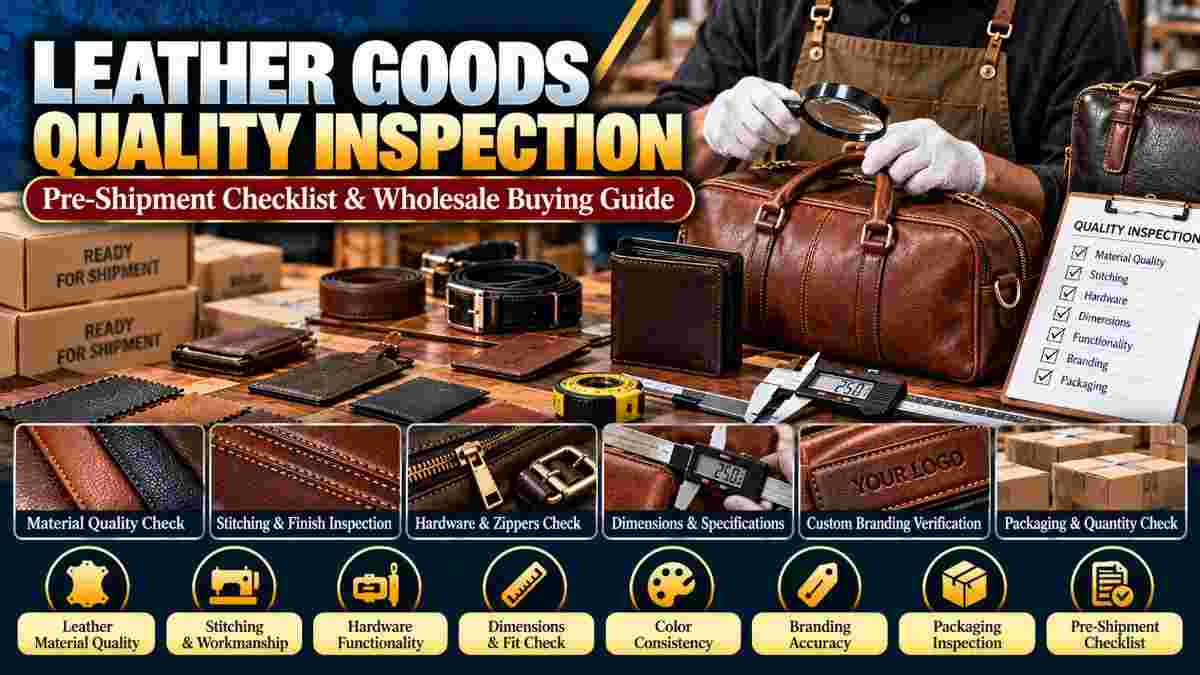
A leather goods quality inspection checklist should cover material authenticity, color consistency, stitching, edge finishing, dimensions, hardware functionality, branding accuracy, and packaging before shipment approval.
For wholesalers, importers, and private label brands, a structured inspection process helps identify defects before products reach customers.
Leather On Call offers leather bags, belts, wallets, and accessories for wholesale and customization enquiries.
Quality inspection helps buyers verify whether finished leather products match approved samples, purchase specifications, and agreed workmanship standards.
Common issues include:
Incorrect leather materials.
Uneven stitching.
Faulty zippers.
Damaged buckles.
Color differences.
Poor edge finishing.
Incorrect dimensions.
Logo placement errors.
Damaged packaging.
Identifying problems before shipment can reduce disputes and unnecessary replacement costs.
Start by comparing the purchase order, approved product sample, technical specifications, and supplier packing list.
Prepare:
Approved reference samples.
Material specifications.
Product dimensions.
Color references.
Branding artwork.
Purchase order quantities.
Packaging requirements.
Agreed defect criteria.
Clear reference documents allow inspectors to evaluate products consistently.
Leather quality should be evaluated by checking material specifications, surface condition, thickness, flexibility, finish, and consistency with the approved sample.
Important inspection points include:
Leather type.
Grain characteristics.
Surface finish.
Color consistency.
Material thickness.
Flexibility.
Unacceptable scratches.
Coating defects.
Natural leather may contain grain variations and minor markings. Buyers should define acceptable variations before production.
Genuine leather identification requires reliable material documentation and, where necessary, appropriate laboratory testing rather than relying solely on appearance or smell.
Visual inspection can identify suspicious differences but cannot always establish material composition.
Request accurate material declarations and supporting evidence when leather authenticity is important.
Avoid relying on informal tests that could damage the product.
Leather stitching should be consistent, securely attached, and free from defects that affect appearance or structural integrity.
Check for:
Uneven stitch lines.
Skipped stitches.
Loose threads.
Broken seams.
Incorrect thread colors.
Poor corner stitching.
Insecure handle attachments.
High-stress areas deserve additional attention.
Edge finishing protects exposed edges, improves appearance, and helps prevent premature separation or deterioration.
Inspect:
Edge paint consistency.
Rough edges.
Peeling coatings.
Cracks.
Uneven trimming.
Exposed adhesive.
Layer separation.
Compare finishing quality with the approved sample.
Leather bag inspection should cover construction, dimensions, stitching, compartments, zippers, handles, lining, and overall functionality.
Important checks include:
Measure bag dimensions.
Inspect external leather.
Check seam quality.
Open and close zippers.
Examine handle attachments.
Test shoulder strap hardware.
Inspect interior lining.
Check compartment construction.
Verify logo placement.
Review packaging.
Explore Leather Bags for related products.
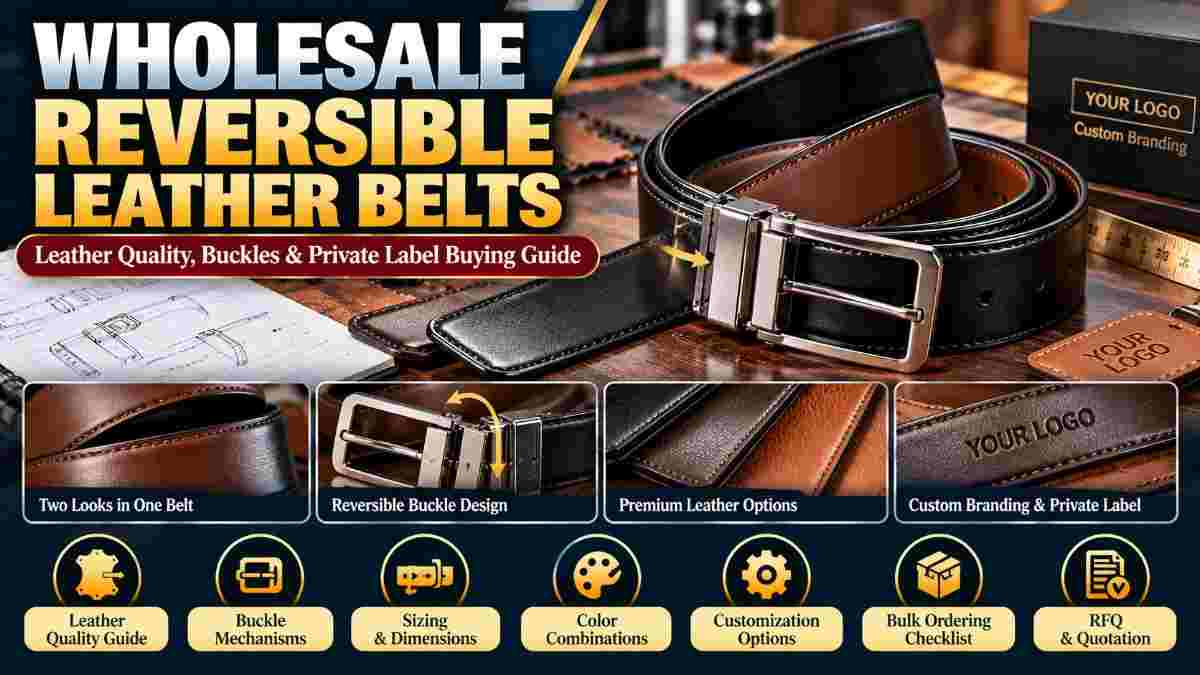
Leather belt quality checks should focus on material construction, buckle strength, sizing accuracy, stitching, and edge finishing.
Inspect:
Belt width and length.
Leather thickness.
Buckle attachment.
Adjustment holes.
Stitching.
Edge coating.
Reversible mechanisms, where applicable.
Branding.
Explore Leather Belts for available styles.
Small leather accessories should be inspected for dimensions, pocket construction, stitching, closures, and functionality.
For wallets, examine card slots, folded edges, cash compartments, and zippers.
For passport holders and card cases, verify pocket dimensions and ease of use.
For luggage tags, inspect attachment strength and identification windows.
Hardware should function smoothly, remain securely attached, and match the approved finish and design.
Check:
Zipper operation.
Slider alignment.
Buckle movement.
Metal plating.
Sharp edges.
Rivet attachment.
Strap hooks.
Magnetic closures.
Repeated functional checks may reveal defects not visible during a quick inspection.
Branding should match the approved artwork, placement, dimensions, color, and application method.
Inspect:
Logo size.
Position.
Alignment.
Embossing quality.
Printing consistency.
Label attachment.
Spelling.
Packaging branding.
Incorrect logos can make otherwise acceptable products unsuitable for retail distribution.
Defects should be classified according to their effect on safety, functionality, appearance, and the agreed acceptance criteria.
Common categories include:
Critical defects: Issues that could present safety risks or violate essential requirements.
Major defects: Problems that substantially affect functionality or commercial acceptability.
Minor defects: Smaller cosmetic issues within the agreed inspection criteria.
Defect classifications should be defined before inspection.
Verify that product quantities, size assortments, colors, labels, and packaging match the purchase order.
Check:
Units per carton.
Product variants.
Individual packaging.
Protective materials.
Carton condition.
Shipping labels.
Packing list accuracy.
Moisture protection where required.
Packaging should protect products during handling and transportation.
A pre-shipment inspection is a quality check performed on completed products before they are dispatched to the buyer.
Depending on the agreement, inspection may involve sampling against a defined acceptance quality limit or another documented inspection plan.
Buyers should agree on sampling, defect categories, testing, and acceptance criteria before production.
If products fail inspection, document the defects, notify the supplier, and agree on corrective actions before accepting the shipment.
Possible actions include:
Repairing defective products.
Replacing unacceptable units.
Correcting branding.
Rechecking dimensions.
Repacking products.
Conducting a follow-up inspection.
Maintain written records of the inspection findings and resolution.
A complete inspection checklist should combine product specifications, workmanship requirements, functional checks, branding, and shipping verification.
Include:
Product name and model.
Approved leather material.
Color and finish.
Product dimensions.
Stitching quality.
Edge finishing.
Hardware functionality.
Interior construction.
Branding accuracy.
Packaging condition.
Quantity verification.
Defect classification.
Inspection results.
Corrective action records.
Wholesale buyers commonly ask about inspection timing, material verification, defect identification, and quality consistency.
Yes. Pre-shipment inspection can identify defects before goods leave the supplier.
Yes. Natural markings can be acceptable when they meet the agreed material and appearance specifications.
Yes. Stitching affects both appearance and structural integrity, particularly at handles and stress points.
Yes. Independent inspection services may be arranged according to the purchase agreement.
No. Inspection reduces procurement risk but cannot guarantee that every product is free from defects.
You can enquire about wholesale leather products by sharing your preferred designs, material specifications, quantity, branding requirements, and quality expectations.
Leather On Call offers products across multiple categories, including leather bags, belts, wallets, and accessories.
Before ordering, discuss sample approval, inspection arrangements, packaging, and commercial terms.
Explore Leather Bags, Leather Belts, or contact Leather On Call to request a quotation.